
Analyzing the Indian Premier League (IPL): format, teams, and impact framework is essential for sports economists, franchise developers, and international media networks who recognize that this multi-billion dollar entity is the absolute epicenter of modern global Twenty20 (T20) cricket. In the international sports ecosystem, an outdated amateur misconception is that the IPL operates as a simple, static knockout bracket or a basic regional league. In reality, the tournament represents a highly volatile, data-driven franchise structure that dictates player valuation matrices, shifts broadcasting technology standards, and controls the international cricketing calendar.
As the competition completes its highly anticipated 2026 cycle under the Board of Control for Cricket in India (BCCI), its metrics have reached record-breaking parameters. From its split-group league stage scheduling to its massive cultural influence on streaming habits, tracking the IPL’s mechanical components is the definitive path to understanding where sports business is heading over the next decade.
In this comprehensive, analytically audited guide, we will break down the precise structural format of the matches, outline the full list of active teams competing across metropolitan hubs, and examine the massive commercial and athletic impact of the league worldwide.
1. The Architectural Tournament Format Explained
A major error in historical articles is assuming the IPL utilizes a straightforward double round-robin table where every team plays everyone else twice. To optimize player rest cycles while maximizing high-stakes matchups, the BCCI utilizes a unique split-group structural matrix.
The Split-Group Matrix
The 10 franchise teams are divided into two distinct groups of five—Group A and Group B—seeded systematically based on historical championship wins and performance metrics.
-
Each franchise plays a single match against the other four teams in their own group.
-
Each franchise plays two matches (home and away) against the five teams residing in the opposing group.
This creates a highly competitive 14-match regular league phase per franchise, totaling 70 league matches across the season. Every outcome updates a unified points table, tracking net run rates (NRR) and ladder positions.
The Page Playoff System (The Postseason Blueprint)
Once the regular season standings are finalized, the bottom six teams are instantly eliminated, and the top four advancing teams enter the “Page Playoff” system—a brilliant format designed to heavily reward regular-season dominance:
-
Qualifier 1: The 1st ranked team faces the 2nd ranked team. The winner earns a direct ticket to the Grand Final, while the loser is given a vital secondary lifeline.
-
The Eliminator: The 3rd ranked team faces the 4th ranked team. The loser is instantly eliminated from the postseason, while the winner advances to the next stage.
-
Qualifier 2: The loser of Qualifier 1 faces the winner of the Eliminator. The victor takes the remaining spot in the final championship match.
-
The Grand Final: The winners of Qualifier 1 and Qualifier 2 battle for the official IPL trophy. In the recent 2026 final hosted at the colossal Narendra Modi Stadium in Ahmedabad, Royal Challengers Bengaluru secured their second consecutive title after a dramatic 5-wicket clash against the Gujarat Titans.
2. The Elite Franchise Roster: Group Divisions and Teams
The league comprises exactly 10 city-based franchises spread across the geographical length of India, organized into two tightly contested groups:
Group A: The Traditional Titans
-
Royal Challengers Bengaluru (RCB): The reigning 2026 defending champions. Captained by Rajat Patidar and anchored by global icon Virat Kohli, they play out of the high-altitude M. Chinnaswamy Stadium.
-
Chennai Super Kings (CSK): A historically dominant 5-time championship franchise. Led by skipper Ruturaj Gaikwad and managed by head coach Stephen Fleming at the iconic M. A. Chidambaram Stadium.
-
Kolkata Knight Riders (KKR): Representing the historic Eden Gardens, this explosive batting franchise is captained by veteran Ajinkya Rahane.
-
Rajasthan Royals (RR): The inaugural 2008 champions, playing their home fixtures out of Jaipur’s Sawai Mansingh Stadium.
-
Punjab Kings (PBKS): A highly resilient franchise based out of Mullanpur’s new Maharaja Yadavindra Singh Stadium, skippered by Shreyas Iyer.
Group B: The Strategic Challengers
-
Gujarat Titans (GT): The powerful 2022 champions and 2026 runners-up. Captained by elite opening batsman Shubman Gill at the 132,000-capacity Narendra Modi Stadium.
-
Mumbai Indians (MI): A joint-record 5-time title holder operating out of the Wankhede Stadium, led by high-stakes all-rounder Hardik Pandya.
-
Sunrisers Hyderabad (SRH): A dominant, hyper-aggressive roster captained by Australian pace icon Pat Cummins at the Rajiv Gandhi International Stadium.
-
Delhi Capitals (DC): Operating out of the capital’s Arun Jaitley Stadium under the captaincy of Axar Patel.
-
Lucknow Super Giants (LSG): A modern powerhouse franchise based at the Ekana Cricket Stadium, captained by wicketkeeper-batsman Rishabh Pant.
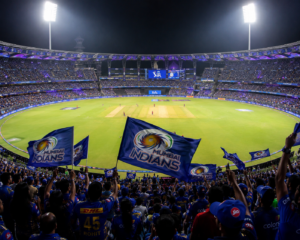
3. The Global Impact of the IPL Ecosystem
Evaluating the Indian Premier League (IPL): format, teams, and impact requires recognizing that its footprints stretch far beyond the boundaries of a sports pitch. The league acts as a massive economic engine and an athletic trendsetter.
Macro-Economic Dominance and Broadcasting Records
The financial footprint of the IPL is staggering. During multi-year media rights auctions, the BCCI regularly secures values exceeding billions of dollars, placing the IPL alongside the NFL and the English Premier League in terms of cost-per-match broadcasting valuation. In 2026, the streaming war reached its peak with integrated mobile streaming platforms delivering automated multi-cam feeds and real-time interactive user telemetry to over 450 million concurrent digital viewers during the playoff stages. This financial liquidity feeds directly into local Indian industries, boosting domestic tourism, hotel hospitality, aviation transit, and sports merchandising sectors.
Revolutionizing Global Athletic Tactics
The IPL has single-handedly transformed the tactical DNA of cricket world-wide. By mixing elite international stars with raw domestic talent, it acts as a global accelerator program. Traditional defensive habits have been systematically erased. Batsmen have engineered specialized equipment and technical movements (such as advanced range-hitting and switch-scoops) to clear deeper boundary lengths.
Furthermore, the introduction of the controversial “Impact Player” rule allows teams to substitute a live player mid-match depending on game states, effectively forcing coaches to treat T20 cricket like a fluid tactical system akin to baseball or American football.
Analytical Performance Comparison Ledger
To provide your readers with a clear, scannable reference to track the core operational data points of the league’s competitive balance, review the audited performance summary layout below:
| Tournament Phase | Match Count Volume | Primary Broadcasting Aim | Core Strategic Rule Variant | Key Business Driving Metric |
| Split-Group Phase | 70 Group Fixtures | Daily Primetime Multi-City Engagement | Group Restraints & Inter-Group Ties | Consistent Ticket Revenue & Brand Placement |
| Page Playoffs | 4 Postseason Matches | Maximum Global Viewership Density | Double-Chance Lifeline for Top 2 Sides | Record-Breaking Digital Ad-Insertion CPMs |
| Mega Auction Cycle | Multi-Day Financial Event | Year-Round Media Narrative Coverage | Strict Maximum Franchise Salary Caps | Escalating Global Player Valuation Matrices |
Step-by-Step Security and Tracking Protocol for the IPL Season
To analyze the intense momentum shifts of an active season like a professional data strategist, implement this structured tracking protocol:
Step 1: Track the Net Run Rate (NRR) Fluctuations
Because the tournament points table is highly compressed, multiple teams frequently finish the regular season tied on identical points. The Protocol: Do not just monitor wins and losses. Utilize specialized live trackers to compute a team’s NRR—a complex calculation comparing a franchise’s total runs scored per over against the runs conceded per over across the entire season. A massive win or heavy defeat during the early group stage carries compounding NRR interest that decides final playoff eligibility weeks later.
Step 2: Audit Stadium Dimension Dynamics
India’s diverse geography introduces massive pitch and architectural variations.
-
Small Stadiums (e.g., M. Chinnaswamy, Bengaluru): Features high altitude and short boundary dimensions, creating a paradise for high-scoring power-hitting where targets of 220+ runs are common.
-
Large Stadiums (e.g., Narendra Modi Stadium, Ahmedabad): Features expansive boundary lengths and diverse soil variants, providing a balanced landscape where spin bowlers and tactical seamers control the pacing.
Step 3: Stream Safely via Official Digital Partners
Due to the unprecedented global popularity of the league, illegal streaming mirrors flood digital networks during the season. These unauthorized platforms are hotbeds for predatory phishing scripts and malware tracking files. Always anchor your viewing pipeline exclusively to licensed official broadcasters (such as JioCinema, Star Sports, or regional media partners) to experience native Ultra-HD 4K feeds safely and securely.
Responsible Sports Analytics and Mental Boundaries
Engaging with the fast-paced, high-emotion world of elite franchise sports requires maintaining clear analytical boundaries, financial discipline, and healthy mental limits over your daily entertainment allocation.
Crucial Safeguards for Professional Fans:
-
Isolate Fandom from Analytical Truth: Never allow emotional attachment to an icon player or a historical team franchise color blind your objective evaluation of real-time pitch conditions, squad depth, workload exhaustion, and data-backed performance matrices.
-
Enforce Strict Time Constraints: Because matches are broadcast daily during prime hours across multiple weeks, set rigid personal time alerts to prevent extended viewing from infringing upon your occupational duties, academic obligations, or physiological sleep health.
-
Maintain Personal Budgeting Lines: If engaging in digital fan engagement platforms or purchasing team merchandise, isolate a fixed, independent entertainment budget. Never divert critical capital designated for living costs or long-term financial investments into temporary sporting properties.
Final Verdict
Mastering your strategic navigation of the Indian Premier League (IPL): format, teams, and impact framework is a matter of choosing deep structural data tracking, multi-cam broadcast evaluation, and pitch metadata analysis over superficial sports summaries. By adapting your tracking pipeline to the split-group format, auditing net run rate dynamics, and respecting the immense financial and cultural forces of the franchise model, you elevate your sports analytics portfolio into an elite tier. Treat your IPL interaction with precise logic, manage your media boundaries with absolute discipline, and enjoy the premier tactical satisfaction of following the world’s most dynamic cricket spectacle.
Disclaimer: Indian Premier League tournament regulations, team ownership details, salary cap parameters, and broadcasting networks are subject to periodic structural adjustments by the BCCI and the IPL Governing Council. This technical sports review is compiled strictly for educational, historical, and informational purposes. Following competitive sports matches always involves a natural variance of real-world results. Viewers are responsible for verifying local regional broadcasting compliance, practicing responsible time allocation, and maintaining healthy personal entertainment boundaries at all times.
