
Dissecting the careers of the most famous cricket players is the ultimate way to understand how this international sport transformed from a traditional colonial pastime into a multi-billion-dollar global phenomenon. Throughout the history of cricket, certain extraordinary athletes have transcended the boundaries of the pitch. These individuals did not just accumulate record-breaking statistics; they fundamentally changed how the game is played, inspired generations of youth, and turned cricket into a religion across nations like India, Australia, England, and the West Indies.
To appreciate the strategic and commercial landscape of modern cricket, one must look at the pioneers who defined different eras. From the master batsmen of the pre-war years to the athletic fast bowlers of the late 20th century and the multi-million-dollar franchise icons of today, these players are the true architects of the sport’s global empire.
In this comprehensive guide, we will analyze the profiles of cricket’s absolute icons, break down their legendary achievements, and provide a structured blueprint of the players who left an permanent mark on the sporting world.
1. Sir Donald Bradman: The Ultimate Statistical Sovereign
Any analytical discussion regarding famous cricket players must begin with the man who holds the most statistically anomalous record in all of world sports: Sir Donald “The Don” Bradman.
The Unattainable Century Average
Operating in the 1930s and 1940s, the Australian icon dominated bowlers with a level of mechanical precision that has never been replicated. In his 52-Test career, Bradman accumulated 6,996 runs. However, his defining monument is his Test batting average of 99.94.
To put this in perspective, no other player in the history of the sport has ever maintained a career average above 62. Bradman needed just 4 runs in his final international innings to achieve a perfect 100.00 average, but was famously dismissed for a duck (zero). Despite this, his name remains the ultimate golden standard of sporting perfection. He established the modern art of batting focus, proving that flawless footwork and psychological grit could conquer any bowling attack.
2. Sachin Tendulkar: The “God of Cricket” and Modern Icon
If Sir Don Bradman represents the peak of statistical perfection, India’s Sachin Tendulkar represents the absolute peak of sporting pressure, longevity, and cultural impact.
Carrying the Hopes of a Billion
Debuting in 1989 at the tender age of 16, Tendulkar carried the emotional weight of an entire nation for over 24 years. Known universally as the “God of Cricket,” his elegant technique and textbook cover drives made him a global icon.
Tendulkar’s record books are practically unassailable:
-
He is the only player to score 100 international centuries (combining Test and ODI matches).
-
He remains the highest run-scorer in the history of both Test cricket (15,921 runs) and One Day Internationals (18,426 runs).
-
He was the first batsman to score a double-century in an ODI match.
Tendulkar did not just win matches; he commercialized Indian cricket, paving the way for the modern financial powerhouse that the sport is today.
3. Sir Vivian Richards: The King of Swagger and Power
Before the modern era of heavy bats and protective helmets, West Indies legend Sir Vivian “Viv” Richards redefined the psychological dynamic between batsman and bowler in the 1970s and 1980s.
Intimidation Without a Helmet
Richards walked out to the batting crease without ever wearing a protective helmet, facing the world’s most terrifying, lethal fast bowlers armed with nothing but his cap, his chewing gum, and a heavy wooden bat. He played with a level of aggressive “swagger” and destructive power that had never been seen before.
He was the centerpiece of the legendary West Indies squad that dominated global cricket undefeated for over a decade, winning the first two ICC World Cups in 1975 and 1977. Richards proved to the world that batting could be used as an offensive weapon, laying the early conceptual foundations for the explosive, fast-paced power-hitting seen in today’s T20 leagues.
4. Shane Warne: The Magician of Spin
Cricket is not just a game for batsmen; it is equally defined by the genius of bowlers. No bowler in the modern history of the sport captured the global imagination quite like Australia’s leg-spinner, Shane Warne.
Reviving a Dying Art form
In the early 1990s, leg-spin bowling was considered a dying, overly complex art form that was being wiped out by raw fast bowling. Shane Warne single-handedly revived it. With his bleach-blonde hair and theatrical showmanship, Warne turned bowling into an intense psychological drama.
In 1993, he bowled the famous “Ball of the Century” against England’s Mike Gatting, where the ball pitched completely outside the leg stump and spun sharply across the batsman’s body to clip the top of the off-stump. Warne finished his career with an astonishing 708 Test wickets, proving that subtle trickery, tactical intelligence, and heavy finger spin were just as deadly as raw physical speed.
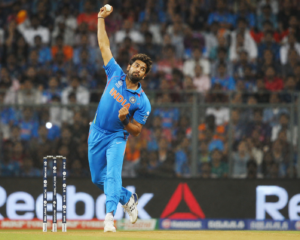
5. Virat Kohli: The Modern King of the Run Chase
As cricket transitioned into the 2010s and 2020s, India’s Virat Kohli stepped up to inherit the crown left behind by Sachin Tendulkar, cementing his place among the most famous cricket players of the digital era.
Supreme Athleticism and Chase Mastery
Kohli completely transformed the fitness standards of modern cricket. Known for his fierce competitive aggression and unmatched physical conditioning, he turned the art of the “second-innings run chase” into a clinical science.
Kohli became the fastest player to cross 13,000 ODI runs and famously broke Tendulkar’s record for the most ODI centuries, crossing the 50-century milestone under immense global pressure. As a global fitness icon with hundreds of millions of social media followers, Kohli represents the modern convergence of elite sport, athletic commercial branding, and intense digital media stardom.
Comparative Blueprint of Cricket’s Greatest Icons
To keep this vast history perfectly scannable and organized for your readers, here is the official structural breakdown of cricket’s most influential historical players:
| Player Name | Nation | Active Era | Core Superpower & Legacy |
| Sir Donald Bradman | Australia | 1928 – 1948 | Unattainable 99.94 Test average; the definition of statistical perfection. |
| Sir Viv Richards | West Indies | 1974 – 1991 | Unrivaled power-hitting and swagger; dominated fast bowlers without a helmet. |
| Sachin Tendulkar | India | 1989 – 2013 | 100 international centuries; the highest run-scorer in cricket history. |
| Shane Warne | Australia | 1992 – 2007 | 708 Test wickets; revived the magical art of leg-spin bowling globally. |
| Virat Kohli | India | 2008 – Present | Master of the run chase; revolutionized modern athletic fitness standards. |
Final Verdict
Studying the lives of these famous cricket players reveals that the true grandeur of the sport is built upon the unique characters of its legends. From the rural precision of Don Bradman to the cultural weight carried by Sachin Tendulkar, the fearless power of Viv Richards, the tactical magic of Shane Warne, and the modern dominance of Virat Kohli, these athletes did not just play cricket—they elevated it.
They turned a simple game of bat and ball into a beautiful canvas of human drama, physical endurance, and strategic brilliance. By understanding their legacies, you gain a far richer, more profound appreciation for the numbers, the passion, and the historic magic that unfolds on the cricket pitch with every new generation of players.
Disclaimer: Cricket statistics, career achievements, and player records are continuously updated and authenticated by the International Cricket Council (ICC) and official statistical bodies like Wisden. While this comprehensive guide showcases universally acknowledged legends based on historical impact, debate over the greatest players of all time remains a subjective element among fans and sports journalists worldwide.
