
Evaluating the types of wood used in cricket bats is the single most critical structural decision for professional players, equipment manufacturers, and sports analysts who understand that performance on the pitch is dictated by timber density, moisture dynamics, and cell mechanics. In the modern cricketing world, a common misconception among amateur players is that all cricket bats offer identical rebound velocity, and that price variations are driven purely by brand marketing or sponsor stickers. In reality, the physical wood profile defines the bat’s structural sweet spot, its durability under high-velocity impact, and its natural shock-absorption capabilities.
As the international sports equipment market transitions through 2026, raw material sustainability and strict manufacturing regulations have pushed willow cultivation standards to an elite level. Selecting the right timber grade is no longer just a matter of aesthetic preference; it is a technical calculation designed to maximize power transfer while protecting the blade from catastrophic split damage.
In this comprehensive, data-backed guide, we will break down the precise botanical differences between primary bat timbers, analyze the structural grading matrix used by master bat makers, and provide you with a systematic blueprint to maintain your equipment for long-term performance.
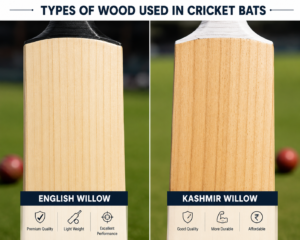
The Botanical Matrix: English Willow vs. Kashmir Willow
When analyzing the types of wood used in cricket bats, the entire global industry relies almost exclusively on two distinct botanical varieties of the willow tree. Both belong to the genus Salix, but their contrasting growing environments create completely different structural characteristics.
1. English Willow (Salix alba caerulea)
English Willow is the undisputed gold standard for professional cricket bats worldwide. Grown primarily in managed wetlands across England, this specific timber thrives in cool, consistent climates with rich soil composition.
-
Cellular Structure: The wood features a highly porous, low-density cell structure filled with minute microscopic air pockets. This unique layout makes English Willow exceptionally lightweight while maintaining a high level of natural elasticity.
-
Performance Profile: When a hard leather cricket ball impacts an English Willow blade, the low-density cells compress and rebound rapidly. This “trampoline effect” yields maximum power transfer and exceptional ball exit velocity, making it the exclusive choice for international test cricketers.
2. Kashmir Willow (Salix alba)
Kashmir Willow is grown across the high-altitude, mountainous terrains of the Kashmir region in India and Pakistan. While it belongs to the same core botanical family, the harsher environmental conditions radically alter its physical properties.
-
Cellular Structure: Due to the dry, rocky soil and extreme seasonal temperature shifts, Kashmir Willow trees grow at a much slower rate. This produces a highly dense, tightly packed, and rigid cell structure with significantly lower natural moisture content.
-
Performance Profile: The high density makes Kashmir Willow bats visibly darker, significantly heavier, and much tougher than English Willow. Because the wood fibers lack natural flexibility, it provides a much stiffer feel upon impact and requires a longer “knocking-in” phase. It is highly valued as a durable, cost-effective option for club players and training sessions.
The Industry Grading Matrix for Premium Cricket Bats
Master bat makers (known as podhais) do not categorize timber solely by its geographic origin. They apply a rigorous 4-tier grading system based on visual grain straightness, blemish density, and structural grain counts.
Grade 1 Premium Timber
The absolute peak of willow selection. A Grade 1 blade features 6 to 10 perfectly straight, unblemished parallel grain lines running vertically down the face of the bat.
-
Aesthetics and Performance: The wood is completely free of knots, butterfly blemishes, or dark sapwood streaks. It delivers the maximum possible rebound velocity immediately out of the workshop but requires delicate care due to its soft, low-density nature.
Grade 2 Standard Timber
Excellent professional quality offering an exceptional balance between performance and real-world durability.
-
Aesthetics and Performance: Features slightly wider or minor curving grains (typically 5 to 8 lines). Small cosmetic blemishes or slight color discolorations are permissible on the edges, but the core sweet spot remains completely clear and highly reactive.
Grade 3 and Grade 4 Utility Timber
These grades form the backbone of grassroots and junior cricket equipment markets worldwide.
-
Aesthetics and Performance: Grains may be irregular, running at alternating angles across the face, accompanied by heavier butterfly markings and natural knots. While visually flawed, these bats are highly dense, structurally robust, and offer exceptional longevity against heavy match use.
Technical Video: How Masters Shape and Select Willow
To truly understand how raw willow logs are split, graded, and compressed into high-performance sporting instruments, observing the manual craftsmanship of a master bat maker is highly educational.
Step-by-Step Conditioning Blueprint to Prevent Wood Splitting
No matter which types of wood used in cricket bats you select, raw willow is a natural organic material that will fail under high-velocity impacts if it is not properly conditioned before entering a competitive match environment. Implement this professional preparation protocol to maximize your bat’s lifespans:
Step 1: Raw Linseed Oil Saturation
New willow blades are naturally dry and brittle. Pour a teaspoon of raw linseed oil onto the face of the blade and spread it evenly across the wood surface using a clean cloth, completely avoiding the rubber handle and splice zone. Lay the bat completely flat horizontally for 24 hours to allow the oil to penetrate the internal cell walls, lubricating the wood fibers to absorb dynamic stress. Repeat this process twice.
Step 2: The Systematic Knocking-In Process
Knocking-in is the process of compressing the soft, loose surface fibers of the willow to form a hardened, highly resilient shell.
-
The Blueprint: Using a dedicated wooden cricket mallet, strike the face and edges of the blade repeatedly for a minimum of 4 to 6 hours. Begin with gentle, localized taps, gradually increasing your force over subsequent sessions. Focus heavily on rounding the edges to prevent fracture lines from developing during off-center edge hits.
Step 3: Installing Anti-Scuff Protective Layers
Once the knocking-in phase concludes, apply a clear fiberglass anti-scuff sheet directly over the face of the bat. This thin protective barrier acts as a structural shield, locking in the inner moisture levels of the timber while absorbing localized surface friction from abrasive leather cricket balls.
Comparative Material Performance Matrix
To provide your readers with a clear, scannable technical overview of how different cricket bat woods match up regarding density, price points, and intended user categories, review the audited comparison layout below:
| Timber Variety | Average Material Density | Natural Elasticity (Ping) | Required Knocking-In Time | Target User Classification |
| English Willow (Grade 1) | Low to Medium | Ultra-High (Immediate) | 4 – 6 Hours (Delicate) | Professional / International Players |
| English Willow (Grade 3) | Medium | High (Balanced) | 5 – 7 Hours | League / Advanced Club Players |
| Kashmir Willow (Premium) | High (Dense/Heavy) | Medium (Requires work) | 8 – 12 Hours (Rigid) | Beginners / Training / Youth Markets |
| Alternative Poplar Wood | Ultra-Low (Fragile) | Very Low | Non-Applicable | Soft Tennis Ball / Casual Backyard Play |
Environmental Sustainability and the Future of Cricket Wood
The rapidly shifting climate metrics of 2026 have introduced massive structural challenges to traditional willow cultivation. Increased seasonal unpredictability across Europe and Asia has forced agricultural scientists to closely monitor water tables and soil composition in willow plantations.
Because an English Willow tree requires roughly 15 to 20 years of carefully controlled growth before it can be harvested for cricket equipment manufacturing, major global sports brands are actively funding deep-tier sustainability programs. Ensuring responsible replanting cycles is the only definitive path to guaranteeing that future generations of players have access to top-tier, lightweight straight-grained timber.
Final Verdict
Mastering your selection across the diverse types of wood used in cricket bats is a matter of prioritizing mechanical data, structural grain profiles, and realistic maintenance commitments over superficial aesthetic choices. By selecting English Willow for ultimate rebound reactivity or choosing premium Kashmir Willow for long-term training durability, you position your game for maximum tactical efficiency. Treat your cricket bat with the exact same maintenance precision you would apply to any high-end engineering tool—saturate the fibers with linseed oil, compress the cell walls through diligent knocking-in, and enjoy the elite competitive advantage of a perfectly balanced, high-performance blade.
Disclaimer: Cricket bat performance metrics, localized grain selections, and timber importing boundaries shift continuously across international shipping zones and manufacturing jurisdictions. This detailed equipment audit is compiled strictly for educational, historical, and sporting informational purposes. Engaging in competitive field sports always carries a natural risk of equipment wear and physical variance. Players are legally obligated to inspect their equipment safety parameters, follow structured conditioning protocols, and maintain strict personal safety boundaries at all times.
